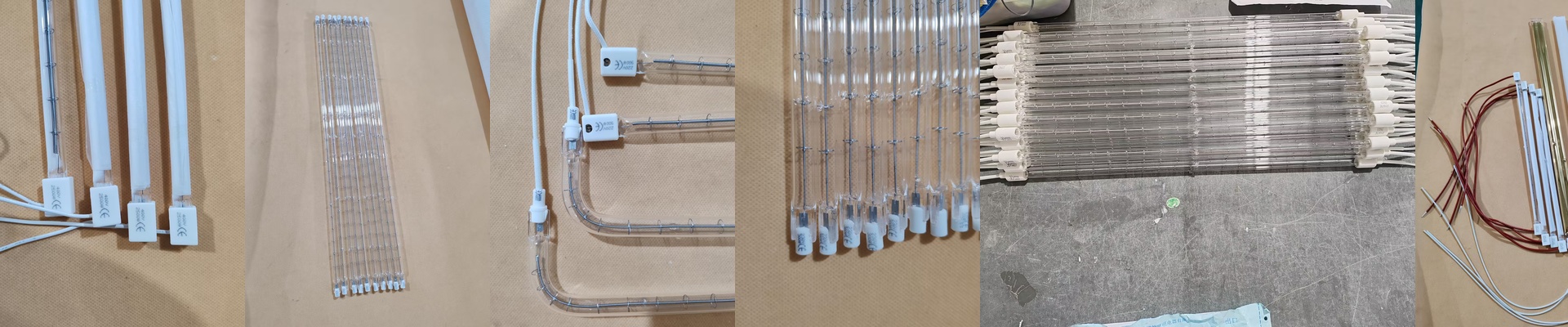
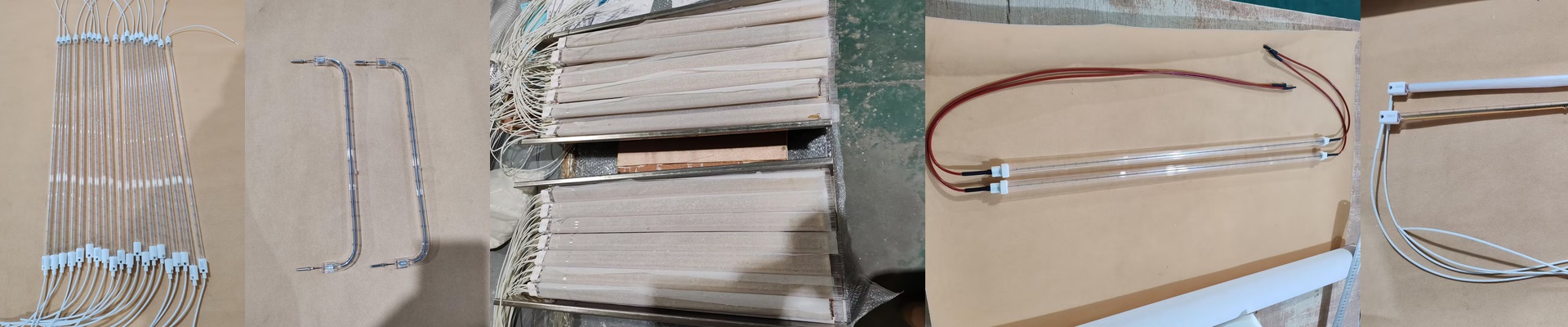
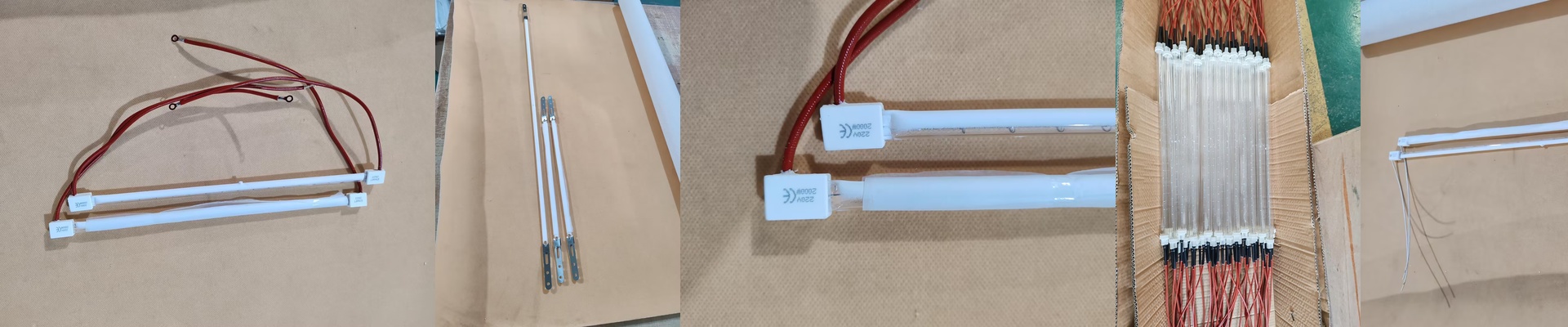
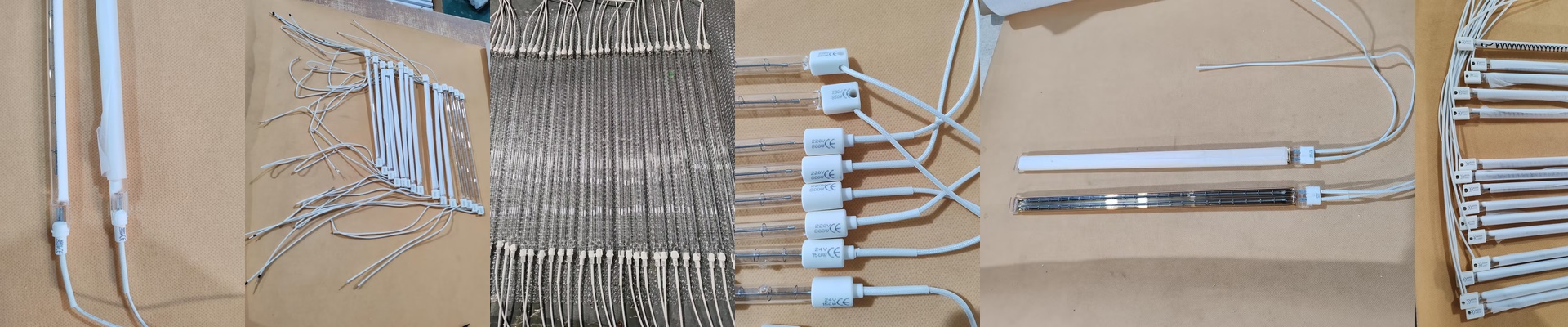
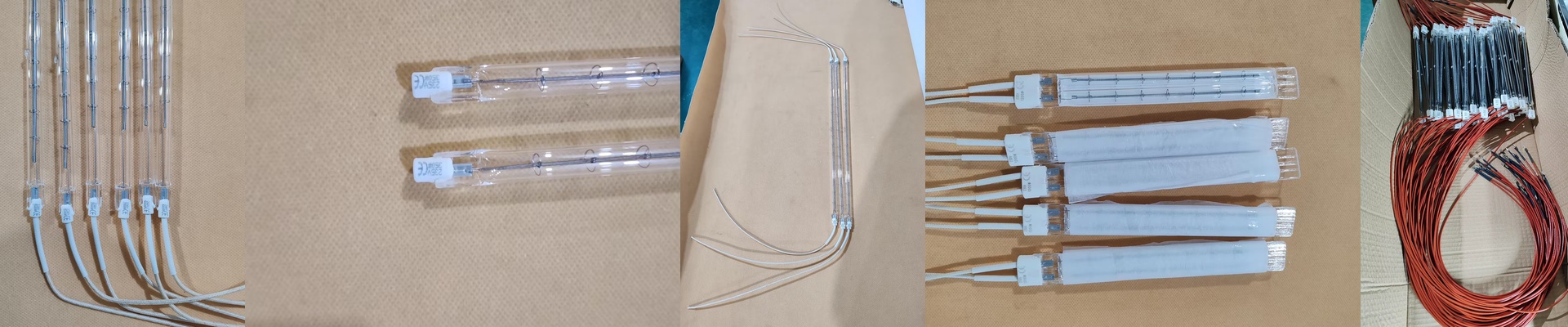
Tungsten Halogen Heating Lamp: Built for 230V, Built for Precision Heat
We built this tungsten halogen heating lamp around a 230V system. Why? Because that’s the voltage most industrial setups already run on. So you can wire it in without adding extra step-down gear. That keeps your control panel clean and cuts losses on long cable runs. The whole point is simple: focused infrared heat where you need it, without stressing the circuit.
Power, Voltage, and Size: The Details That Matter
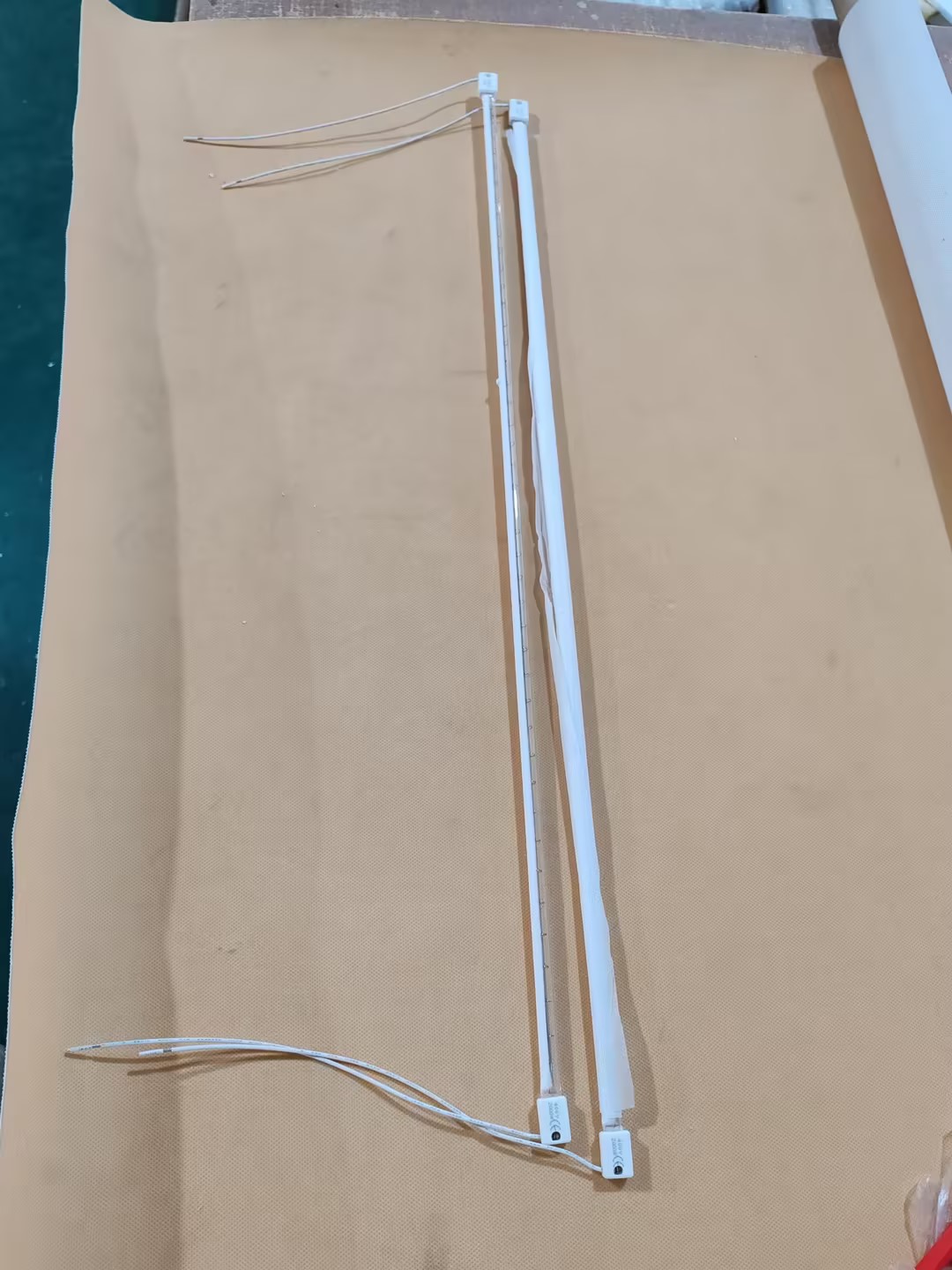
The 230V rating isn’t arbitrary—it’s matched to the filament geometry so you hit your wattage with stable resistance. That means predictable current, which makes your PLC and contactor sizing consistent. And the size? We shaped it to slip into tight heating zones—small ovens, compact enclosures, tight process windows. The compact footprint gives you better control over where the heat lands, and it shrinks the distance from the source to the workpiece.
Inside the Lamp: Clean Heat, Tough Build
Inside, the tungsten works with a halogen regenerative cycle. That keeps the inner wall cleaner and keeps output steady over time. The quartz envelope handles high temperatures without cracking under fast heating and cooling cycles. Because of the halogen chemistry, we can run the filament hotter—so you get more infrared output and faster response. For the connections, we went with an R7s connector. It’s secure, with two solid contact points that handle high current and repeated installs. It’s a straight-forward, drop-in mount that holds up to vibration and frequent maintenance.
Where It Shines: Fast Heat, Simple Install
Use this lamp wherever you need heat that turns on fast and hits hard—adhesive curing, plastic softening, coating drying, component preheating. The 230V design makes integration easier: fewer step-down boxes, fewer places for something to fail. It heats up quickly, so cycle times shrink and repeatability improves. Now, the trade-off: high heat density means you need proper clearance and airflow. Without enough cooling or spacing, nearby parts can take a hit from reflected heat. But when you match the lamp to the chamber geometry, you get predictable temperature control with less maintenance downtime.